




Image Credit: Depositphotos
A Tale of Two Bosses
Meet The Micromanager.
Chances are, you have met The Micromanager.
You will find him wandering the halls, looking for team members who dare deviate from their work. His favorite find: a collective group chatting by the coffee pot.
“Aha!” he says to himself. “These people need more work!”
Of course, he doesn’t realize they need more coffee to keep up with the tasks already assigned, which is both their reason for meeting at the coffee pot and the conversation that ensues. He takes this, instead, as a sign that they need to be given additional tasks. He feels a personal responsibility to fill the eight hours for which each person is paid to work. His goal is to fill their time to the brim, not their coffee cup.
The Micromanager never shares the big picture. He is certain his team can only handle tasks, which he gleefully assigns, and often pulls back.
On the rare occasion he assigns a project, he will also assign the steps that go with it. And, often, he will jump in and do the tasks himself, muttering, “If you want something done right, you have to do it yourself.”
“Copy me on every email,” he says. “And give me a daily report of your work.”
If an employee makes a mistake, The Micromanager is the first to criticize, often in front of their fellow team members.
An employee review with The Micromanager fills even the strongest with a sense of foreboding.
- “Failure to meet expectations.”
- “Lack of initiative and problem solving.”
- “Low productivity.”
All the while, employees face an increasing loss of confidence, creativity, and caring.

Image Credit: Depositphotos
Meet The Abdicator.
On the other end of the spectrum is the second boss, The Abdicator.
He comes up with great and seemingly endless impossible ideas. Then he tells his team, “Thanks! I know you’ll do a great job on this! And, by the way, we need this done ASAP.”
His employees cringe as their adrenal levels rise like a fireman’s when the alarm bell sounds. There is never a definition of ASAP.
“Wait! We have a couple of questions…”
But it is too late. The Abdicator has left the building.
The exhausted team sighs.
“I guess we will just have to figure it out and do the best we can.”
“Who is buying pizza? It is going to be a long night.”
The Abdicator does show up again, though. And that is when it is time for the credits to roll. He gladly accepts the accolades without acknowledging the contributions of his team.
The Balance
Obviously, neither of these extremes presents a healthy working team environment. And yet, they are prevalent in today’s workforce to at least some level. Leaders operate without realizing the impact they are having on the team’s confidence, morale, creativity, and productivity.
These practices result in employees who want to lead but can’t, and in an imbalance of autonomy and accountability.
When a leader learns to strike a balance between empowerment (trusting and enabling a team member to do the work) and accountability (setting clear boundaries, expectations, rewards, and consequences), amazing things can happen.
How can you establish a good balance between empowerment and accountability?
- Share the big picture.
Give your people context, not just tasks. You may be surprised at the ingenuity that emerges when your team is empowered to share ideas and solve problems.
- Set clear goals.
Work with your team to clarify the end goals, along with reasonable milestones and timelines. Answer clarifying questions until everyone shares the same vision.
- Measure success.
This is where accountability kicks in. Accountability to a person is one thing, but it can be subjective. Accountability to defined metrics, on the other hand, provides a standard to which everyone can aspire. These can be related to income, customer service ratings, time efficiencies, process improvements, qualitative measures, or quantitative production numbers. Instead of obscure reviews of “missed expectations,” which were never defined in the first place, metrics give everyone a solid platform for measuring success.
- Establish decision-making guidelines.
If every single decision must be approved by you, you might be The Micromanager. If, on the other hand, you don’t want to make any decisions at all, you could be The Abdicator. The balance of empowerment and accountability comes from simply determining who is responsible for decisions and at what level. This gives team members the ability to do the work and serve customers well, even when you are not available.
- Celebrate success and learn from failure.
Share credit with the team who helped you achieve the goal. And look at failure as a chance to learn, improve, and develop your team for higher levels of leadership.
- Pick your battles.
In matters of principle, hold boundaries. In matters of preference, allow a level of flexibility and listen to those with differing thoughts and ideas.
- Regulate your leadership.
On the scale from The Micromanager to The Abdicator, position yourself where there is a balance of responsibility, oversight, and decision-making. Your goal is not to do the work, but to develop leaders. When you do the work, you stunt the leadership potential of your team. Instead, provide coaching and support. Help your team members grow. And pave the way for their success.
- Praise and direct.
Don’t make your employees feel like they work every day in a failure factory. Yes, you will need to have some hard conversations. But, also, don’t forget to recognize the good work your people do. As in any good relationship, positive reinforcement should outpace the occasional necessary negatives.
Define Empowerment and Accountability
Protect yourself from becoming The Micromanager or The Abdicator, and spare your team the experience. Instead, take time to define the parameters of empowerment and accountability, first for yourself, and then for your organization. The results will be measurable, all the way to the bottom line.
Curious how your company measures up in this area, with real data you can take to the bank? Connect with us or take the assessment here (https://www.orgiqsuite.com/). Get your Culture Scorecard today and get back on track to success.
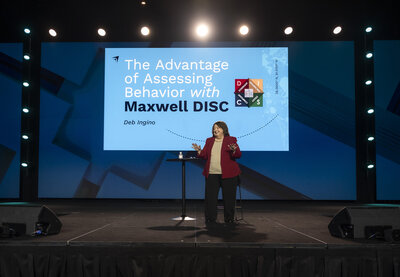
Deb Ingino is a highly sought-after executive coach, mentor, consultant, and speaker worldwide. Deb is well versed in business operations and in the importance of asking key questions most business leaders won’t ask themselves. She brings deep experience in leadership development, strategy, high performance team building and effective communication. She has a passion for leading people to discover and maximize their strengths as well as those of fellow team members, while offering advanced strategies to achieve high performance. Deb is the perfect fit if you’re ready to take your leadership and impact to the next level!








+ view comments . . .