




Image Credit: Depositphotos
Imagine you are talking with someone in the early 1900’s, describing your work today – how you work (remotely, perhaps), how you communicate (via text or Zoom), and what you produce (digital products).
They would probably look at you like you just landed from outer space!
In today’s workforce, the main generations represented are Baby Boomers, Generation X, and the Millennials. Coming onboard now are the Gen Z-ers.
Baby Boomers, in large part, have experienced work in terms of a more corporate culture, with defined career paths determined by employers. Where their parents may have worked for one company for life, Boomers chose to uplevel across one to three companies in order to reach their career aspirations. They were also those whose careers were affected by mergers and acquisitions. These changes may have driven their parents to question all the changes and wonder why they couldn’t hold down a job.
Then Generation X came along. Having seen their parents struggle to climb the corporate ladder and the effects of mergers and acquisitions, GenX sought more work-life balance. Accustomed to independence as latchkey kids, they chose their own career paths, with many becoming entrepreneurs. Some were the original digital nomads, forging into a new frontier in ways their ancestors could not have comprehended, but that latter generations would embrace.
The Millennials embraced the digital frontier, recognizing the freedom and flexibility it provided. It allowed them to collaborate and serve along with others rather than serve in the more traditional top-down models of business. Shared resources and teamwork models became their hallmarks. If there were issues, they worked together to solve them. If something needed to be done, they collaborated with others. Work-life balance for them was more a matter of work-life integration, where the two were interwoven.
Gen Z-ers, growing up in chaotic times, seek the stability and security of their ancestors. But instead of paper, in-person connections, and single company focus for life; they are the most digital generation to date. Many enjoy doing hands-on work – for example, the trades – and they are also highly integrated with technology. For them, AI solutions are a trusted resource.
Challenges
Now, imagine a conversation across generations in the workplace, and you can understand some of the challenges.
- “Why can’t they just come into the office at 8 a.m. and work until 5 p.m. – or later- like we did in my day?”
- “Why are there so many rules?”
- “Why do I have to go into an office?”
- “Why won’t they show up for in-person meetings?”
- “Why are they not answering my phone calls?”
- “Why don’t they just text me?”
- “AI can do that.”
- “I don’t like AI at all. It will replace us all.”
- “Why did they leave after just two weeks on the job?”
- “How can someone stay at a company their whole life?”
You get the idea. And now you can understand why there are these differences. These are different people with different life experiences.
Common Ground
And, yet there are ways to get to common ground.
Understand the differences.
Knowing why the generations are different in these ways is important for understanding. Their experiences are woven into who they are.
Value the perspectives.
Structure and freedom. Face-to-face communication and digital communication. The point is you need both perspectives. This provides balance. Rather than fight for one side or the other, discuss how you can, for instance, create a solid structure with accountability that also provides needed flexibility. Use all the methods of communication rather than just the one most comfortable for you.
Integrate strengths.
While there are generational strengths, there are also individual strengths. Take the time to learn the strengths of your team members. Just as you integrate digital with analog, and in-person with virtual, you can integrate the opposite strengths of your team members. This creates a strong team bond and, also, provides more innovative and integrated solutions.
Leadership Action Tip
Purposely take time to talk with your team members one by one. Learn who they are. Ask what their interests are, and what it is like to be a member of their generation. Ask how you can best communicate with them. Learn what is important to them when it comes to their work. And be sure to help them see how their strengths and experience add value to the company and the team.
For valuable resources on Leadership Strengths and Tools, click here.
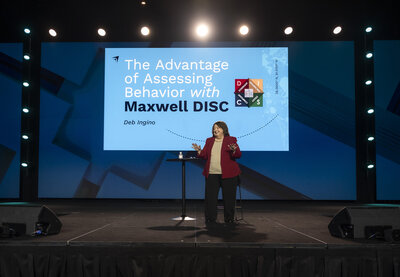
Deb Ingino is a highly sought-after executive coach, mentor, consultant, and speaker worldwide. Deb is well versed in business operations and in the importance of asking key questions most business leaders won’t ask themselves. She brings deep experience in leadership development, strategy, high performance team building and effective communication. She has a passion for leading people to discover and maximize their strengths as well as those of fellow team members, while offering advanced strategies to achieve high performance. Deb is the perfect fit if you’re ready to take your leadership and impact to the next level!








+ view comments . . .